

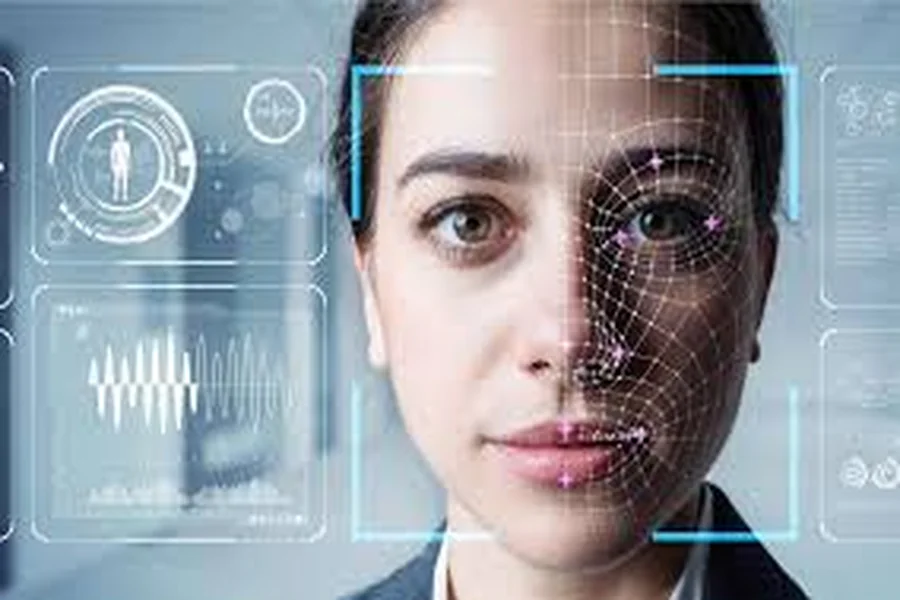
In the modern digital landscape, the phrase seeing is believing has become a relic of the past. As we navigate the mid-2020s, the rapid proliferation of generative artificial intelligence has ushered in an era of unprecedented creative potential and unparalleled digital risk. At the heart of this shift lies the deepfake, a sophisticated blend of deep learning and fake media that can convincingly depict individuals saying or doing things they never did.
As these synthetic creations move from niche internet forums to the forefront of global politics, corporate security, and personal privacy, the development of robust detection mechanisms has become a societal imperative. Understanding how to navigate this synthetic world is no longer a luxury for specialized forensic labs; it is an essential skill for the modern internet user.
1. Analyze Biological and Physiological Inconsistencies
Early deepfakes were notorious for dead eyes or a lack of blinking. While modern AI has improved significantly, biological inconsistencies remain a key detection vector because human anatomy is incredibly complex to simulate perfectly.
- Irregular Blinking: Humans blink in patterns that correspond to their speech and emotional state. Discrepancies in these patterns blinking too fast, too slow, or not at all can flag a video as synthetic.
- Blood Flow (Photoplethysmography): Real human skin undergoes microscopic color changes as the heart pumps blood. High-end detectors can scan for these pulses; a lack of rhythmic color change often indicates a synthetic overlay.
- Eye Reflection Geometry: In a real photo, light reflects off the cornea in a mathematically consistent way across both eyes. AI often struggles to replicate this physical interaction perfectly, leading to mismatched specular highlights.
2. Use Forensic Pixel Analysis
This method looks past the image and analyzes the underlying data. Every camera sensor leaves a unique noise pattern on a photo, known as Photo-Response Non-Uniformity (PRNU).
A deepfake, which is a composite of different images, will have inconsistent PRNU patterns across the frame. Advanced detection tools can map these inconsistencies to prove that a face has been swapped onto an existing body or that specific areas of the frame have been synthetically generated.
3. Check for Temporal Consistency
In a video, every frame must lead logically to the next. Deepfakes often suffer from jitter or ghosting, where the synthetic mask fails to track the underlying movement of the head or torso perfectly.
By analyzing the video at high frame rates (e.g., 60 frames per second), detection algorithms can spot micro-movements or warping around the chin and hairline that the human eye would naturally smooth over. If the face seems to detach slightly during a quick turn of the head, you are likely looking at an AI generation.
4. Integrate Automated API Solutions
For businesses, social media platforms, and news organizations, manual verification is impossible given the sheer volume of content uploaded every second. This is where automated integration becomes critical. To protect your platform or personal data from the influx of synthetic misinformation, you should visit website to explore how automated detection can be integrated directly into your digital workflow.
By leveraging a specialized API, organizations can scan thousands of media files in real-time, receiving a probability score that allows them to flag or remove suspicious content before it spreads.
5. Implement a “Zero-Trust” Media Framework
As we look toward the future, the industry is moving toward a “Zero-Trust” model for digital media. This involves shifting the burden of proof from the viewer to the creator.
- Content Provenance: Using standards like C2PA to embed metadata at the point of capture.
- Digital Watermarking: Utilizing invisible markers embedded in AI-generated content by the creators themselves.
- Liveness Detection: Employing tools that ensure the person on the other end of a camera is a physical human being, not a digital injection, which is particularly vital for banking and security.
Challenges in the Detection Arms Race
The primary challenge in this field is the “adversarial” nature of AI. Every time a new detection method is published, AI researchers (and bad actors) can use that information to train a better Generator that avoids those specific “tells.”
Furthermore, the “Liar’s Dividend” has become a significant social problem. This is a phenomenon where a public figure caught in a real compromising video simply claims it is a “deepfake” to avoid accountability. Without trusted, independent detection technology, the public becomes paralyzed by skepticism, unable to distinguish truth from fiction.
Frequently Asked Questions
Can I detect a deepfake just by looking at it?
While you might spot obvious errors in low-quality fakes (like blurred edges or weirdly shaped teeth), professional-grade deepfakes are designed to fool the human eye. Reliable detection almost always requires algorithmic analysis.
Is deepfake technology illegal?
The technology itself is a tool and is not illegal. It is used legally in movie dubbing, gaming, and visual effects. However, using it for fraud, non-consensual imagery, or election interference is a crime in many jurisdictions.
How does a detection API handle compressed videos?
Compression (like the kind used by WhatsApp or social media) can “smear” the digital artifacts that detectors look for. High-quality detection APIs are trained specifically on compressed datasets to remain effective even when the video quality has been downgraded.
What is the difference between a “Cheapfake” and a “Deepfake”?
A “cheapfake” is media manipulation using simple tools (like slowing down audio or re-contextualizing a clip). A “deepfake” specifically refers to media created using deep learning and neural networks.
Will we ever have 100% accurate detection?
In security, there is no such thing as 100% certainty. However, by combining multiple methods like checking for biological signs and digital artifacts—we can reach accuracy levels that are high enough to protect most users and systems.
Conclusion: Staying Ahead of the Algorithm
The evolution of deepfake technology is a double-edged sword. While it offers incredible opportunities for personalized education and accessible entertainment, it also threatens the foundation of our shared reality.
The defense against synthetic deception is not a one-time fix but a continuous process of innovation. By combining the power of automated detection APIs with a more digitally literate public, we can build a resilient ecosystem where truth remains verifiable.
As the “arms race” between generation and detection continues, the winners will be those who prioritize transparency, invest in verification tools, and maintain a healthy level of critical thinking in an increasingly synthetic world.
